


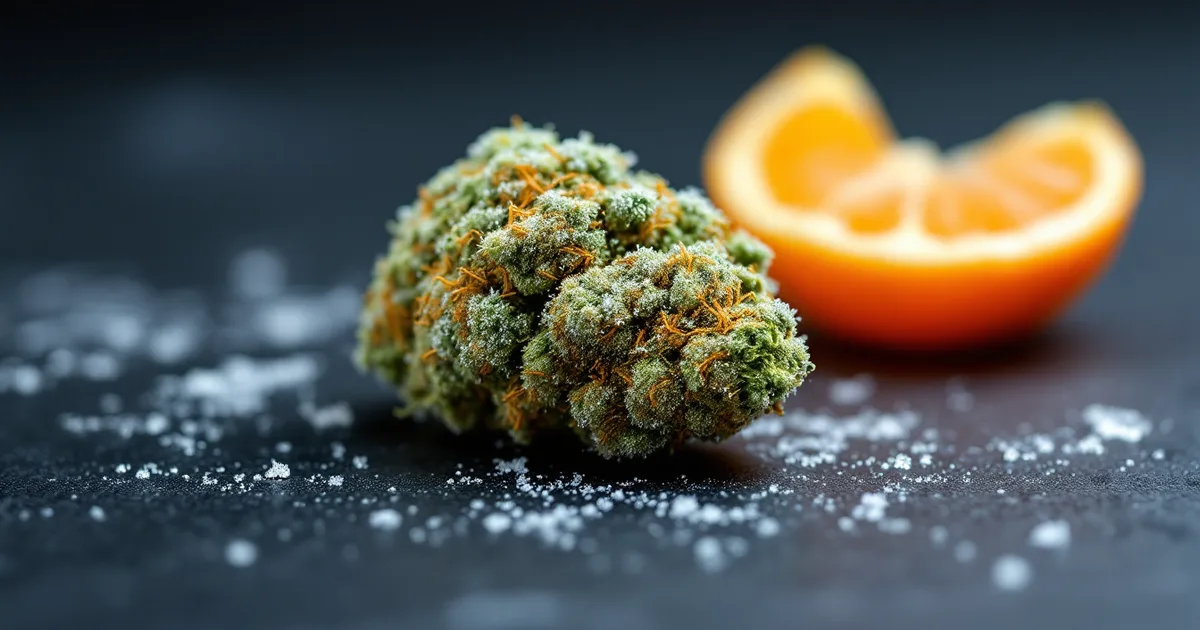

Tangie is a sativa-dominant strain bred in California from California Orange and a Skunk line, and it smells loudly of tangerines. A family grower called Crockett created it in the early 2000s, and DNA Genetics took it to seed buyers worldwide, which is why DNA usually gets the credit. The lab data is less tidy than the name: Leafly's terpene results put myrcene and terpinolene on top, with limonene well down the list.
Two Tangie blends and a way to compare them
Both Entour™ Tangie blends sit in our Inspired® line, which takes a Native® cultivar profile and builds extra flavor on top. Each lists limonene as its primary terpene, then caryophyllene and myrcene.
- Inspired® Tangie, from $35. The straight citrus pick, with pomelo, pineapple, yuzu and lime, for products where the orange should lead.
- Inspired® Sour Tangie, from $35. Same limonene lead, with a sweet-and-sour turn of orange blossom, green mango skin and clementine peel.
- Build Your Own sample pack, $80 all in. You choose the six 5 mL bottles, so both Tangies can go head to head with four other blends in your own base.
Tangie strain at a glance
| Trait | Tangie |
|---|---|
| Type | Sativa-dominant; DNA Genetics lists it at about 70% sativa, 30% indica |
| Bred by | Crockett of Crockett Family Farms, California; released worldwide by DNA Genetics |
| Year | Early 2000s, by Crockett's account; first Cannabis Cup win in 2011 |
| Parents | California Orange (Cali-O) x a Skunk line, usually given as Skunk #1 |
| Awards | 1st and 2nd, Best Sativa by a Seed Company, 2014 High Times Cannabis Cup, Amsterdam |
| Dominant terpenes | Myrcene, terpinolene, pinene (Leafly lab data); DNA names limonene |
| Aroma and flavor | Tangerine, orange peel, citrus, apricot, tropical fruit, a faint skunk |
| Reported effects | Energetic, focused, uplifted |
| THC | 18 to 22% per Crockett; Leafly lists 17%; DNA quotes 22 to 24% |
| Entour™ blends | Inspired® Tangie and Inspired® Sour Tangie |
What is the Tangie strain?
Leafly files Tangie simply as a sativa, while DNA Genetics' Tangie seed listing puts it at roughly 70% sativa and 30% indica.
Its reputation rests on smell. Nick, the founder of Oni Seed Co., told Leafly that among equally well-grown strains laid out on a table, "Tangie is just going to dominate the room with smell."
Tangie history and lineage
Who bred Tangie: Crockett or DNA Genetics?
Both, in different roles. Leafly's Tangie family history traces the strain to Crockett Family Farms, a multi-generation growing family in the Sierra Nevada foothills near Yosemite. They kept California Orange as an heirloom and crossed it with other plants each season. One cross, with a Skunk mix plus what Crockett calls a family secret, produced Tangie.
DNA Genetics, founded by Don Morris and Aaron Yarkoni, is the name most labels carry. Morris told Cannabis Business Times in 2019 that DNA released Tangie under its own name for its first few years to give Crockett a global platform. DNA bought Crockett Family Farms that same year, and its seed page lists the genetics as "Clone Only x Crockett's Selection."
The father gets described three ways: Skunk #1 on Leafly, a Skunk hybrid in Cannabis Business Times, and a Skunk mix with a secret extra in Crockett's telling.
Leafly dates Tangie's first Cannabis Cup win to 2011. At the 2014 High Times Cannabis Cup in Amsterdam, the published results gave Tangie both top places for Best Sativa by a Seed Company, with Crockett's Cut first and DNA's Tangie second.
Tangie vs Tangerine Dream
Two different plants carry the Tangerine Dream name. Leafly calls Tangie "a remake of sorts" of a Tangerine Dream that was sought after in the 1990s, and DNA describes that older plant as Cali-O crossed with a Skunk hybrid, the same recipe.
The Tangerine Dream on Leafly's strain page is a Barney's Farm cultivar from Amsterdam, bred from G13, Afghan and Neville's A5 Haze and listed at 60% sativa and 23% THC. Its published lineage shares no parents with Tangie. Leafly shows Barney's version led by myrcene, caryophyllene and limonene, against Tangie's myrcene, terpinolene and pinene. Both smell of oranges, by different routes.
The Tangie family
Leafly's genealogy names Tropicana Cookies, from a Tangie male crossed to Cookies, and Clementine, whose cross with Purple Punch became Mimosa. DNA's Sour Tangie pairs Tangie with East Coast Sour Diesel. Extracts helped too. Leafly's history notes that in the shatter era, when most shatter tasted the same, Tangie shatter still tasted like Tangie.
What does Tangie smell like?
Tangerine first, then a wider spread of fruit. Leafly's top flavor tags are orange, citrus and apricot, with tropical, grapefruit, sweet and a little skunk also logged. DNA's seed page adds acidic undertones and hints of exotic wood, spice and incense. It divides people: Oni Seed Co.'s Nick told Leafly that anyone who dislikes a strong grapefruit flavor won't like Tangie.
The orange is not simply "lots of limonene." In a 2025 PLOS ONE study of 91 flower samples, Oregon State University researchers found terpinolene was the only terpene consistently linked to citrus aroma, while limonene showed no such link. A 2023 ACS Omega paper tied the citrus and tangerine notes of some cultivars to trace sulfur compounds of the 3-mercaptohexyl family, also found in grapefruit and passionfruit. Neither study tested Tangie by name, but both fit a strain whose flower data puts terpinolene ahead of limonene.
Tangie terpenes: what the lab data shows
Ask three sources for Tangie's terpene profile and you get three answers. Leafly's lab-tested products put myrcene first, then terpinolene and pinene, with caryophyllene fourth and limonene well below. DNA Genetics' seed page names limonene as the dominant terpene, while DNA's own Tangie article lists myrcene, caryophyllene and alpha-pinene.
The mismatch has a documented cause. In a 2022 PLOS ONE analysis of US lab data, Smith and colleagues picked Tangie as their example of an inconsistent strain name. No single terpene group held more than 62.5% of Tangie products, while one group held 96% of Purple Punch products, their consistent example.
Carry that warning into any strain data, ours included. Retail strain names are loose, and a jar labeled Tangie may come from a cut far removed from Crockett's plants, or from a plant with no tie to it at all. The terpene list under the name describes whatever was tested.
Taken on its own, Leafly's ranking matches the study's high terpinolene-myrcene group, the one where sativa-labeled products were over-represented.
Myrcene
Leafly's most abundant terpene in Tangie, tagged herbal, and what Leafly calls the most common terpene in cannabis. It gives the fruit an earthy base.
Terpinolene
Second on Leafly, tagged fruity, and the compound that separates Tangie from a plain orange-peel profile. Leafly's lab data for Trainwreck lists the same three terpenes in a different order, and Super Lemon Haze is another citrus sativa where terpinolene, not limonene, leads.
Pinene
Third on Leafly, tagged pine, and named by DNA as alpha-pinene with a fresh, crisp edge. In a blend, that green top note keeps the orange from tasting like candy.
Limonene and caryophyllene
Limonene is what most people expect in an orange strain. DNA's seed page names it as dominant and it leads both our blends, yet Leafly's flower data ranks it low. That gap is the clearest sign that "Tangie" covers more than one chemistry. Caryophyllene, the peppery one, is fourth on Leafly.
Tangie strain effects: what people report
Leafly lists energetic, focused and uplifted as Tangie's top effects across more than 1,300 reviews. Happy, creative and talkative draw plenty of votes too. Reviewers' downsides include dry mouth, dry eyes and feeling anxious.
Crockett described it to Leafly as gentler than many older sativas, without the heavy pull of an indica.
Cannabinoids such as THC are what intoxicate, and terpenes do not. Terpenes shape aroma and flavor and, in early research, are associated with the character of an experience. Our terpene blends contain no THC.
Who the Tangie strain suits
For consumers, Tangie suits people who pick by flavor and want bright citrus, and its reviews read like a daytime strain. If strong grapefruit puts you off, or energetic strains leave you on edge, note that "anxious" is among its most logged negatives.
For brands, Tangie is a citrus name with history behind it: Cup wins, a big family of descendants, and a reputation built partly in extracts. It fits vape carts and concentrates where aroma sells. The catch is the inconsistency above. Decide which Tangie you are selling, a limonene-forward orange-peel version or a terpinolene-forward one closer to Leafly's flower data, and hold it there batch after batch. Our strain guides cover other citrus and sativa names worth comparing.
How Entour™ recreates the Tangie profile
Our two Tangie blends are flavor builds, and we would rather say so plainly. They belong to the Inspired® line, described on our site as "flavor-forward cultivar-specific Native® profiles." Native® blends are True To Plant® rebuilds of real cultivar data, using the fingerprinting method developed at The Werc Shop®. An Inspired® blend starts from one of those profiles and layers more flavor on top.
Inspired® Tangie lists limonene as primary, then caryophyllene and myrcene. Pomelo and pineapple meet yuzu and lime, and the vibe line on its page reads "Sunny rays on coolish days." It sits on the orange-peel side of Tangie, not the terpinolene side.
Inspired® Sour Tangie has the same top three in the same order and leans tart: orange blossom and green mango skin, then lemon-neroli, spring foliage, yuzu and clementine peel. Its vibe is "Puckerlicious."
Neither is sold as a match to a particular lab report. Both are food grade, with no minimum order, and run from $35 for 5 mL to $2,650 for a liter. Ask and we'll send the COA, SDS and TDS. If your product needs Tangie's terpinolene-forward flower chemistry instead, our formulation team can adjust an existing blend's terpene ratios.
FAQ
Is Tangie indica or sativa?
Sativa-dominant. Leafly lists it as a sativa and DNA Genetics gives about 70% sativa, 30% indica. A 2022 study of US lab data found such labels a weak guide to chemistry, and used Tangie as its example of an inconsistent strain name.
What terpenes are in Tangie?
Leafly's lab-sourced data lists myrcene, terpinolene and pinene. DNA Genetics names limonene as dominant on its seed page, and myrcene, caryophyllene and alpha-pinene in its strain article. Our Inspired® Tangie lists limonene, caryophyllene and myrcene.
What does Tangie smell like?
Fresh tangerine and orange peel, with apricot, tropical fruit and grapefruit behind it and a faint skunky funk underneath.
How strong is the Tangie strain?
Crockett put it at 18 to 22% THC. Leafly lists 17%, and DNA quotes 22 to 24% for its seed line. Potency shifts with cut, grow and harvest, and it comes from cannabinoids rather than terpenes.
What are the effects of Tangie?
Reviewers on Leafly most often report feeling energetic, focused and uplifted. Dry mouth, dry eyes and feeling anxious are the downsides they mention.
What is the difference between Tangie and Tangerine Dream?
Tangie is Crockett's Cali-O x Skunk cross, which Leafly calls a remake of a 1990s Tangerine Dream. Barney's Farm's Tangerine Dream is a different plant, bred from G13, Afghan and Neville's A5 Haze, with no shared parents in its published lineage.
Where to take this next
For a citrus cart, pre-roll or trial run, Inspired® Tangie in the 5 mL size is the cheapest way to find out whether this orange suits your base. To smell it beside Sour Tangie and four more blends, build an $80 Build Your Own sample pack. Business buyers after volume pricing or a terpinolene-forward custom match can talk to our formulation team.
About the author: The Entour™ team is a division of The Werc Shop®, the first commercial cannabis laboratory to test for terpenes back in 2011. The team formulates True To Plant® terpene profiles for licensed cannabis brands across the US, Canada, and tribal markets.
Read More
Tahoe OG Strain: Terpenes, Lineage and Effects
Tahoe OG is a cut of OG Kush, one selected plant kept going as clones, named for the Lake Tahoe area of California where it is said to have surfaced. It smells of lemon and pine over damp earth. Lab d
Hindu Kush Strain: Terpene Profile, Smell, Effects and Landrace Roots
Hindu Kush is a pure indica landrace, named after the mountain range it comes from, which straddles Afghanistan and northwest Pakistan. It smells earthy and woody, with a sweet sandalwood note that Le
Headband Strain: Origins, Terpenes, Diesel Aroma and Effects
Headband is a hybrid cannabis strain bred from OG Kush and Sour Diesel, named for the band of pressure many people say they feel around the forehead. It smells of diesel and lemon over an earthy base.