


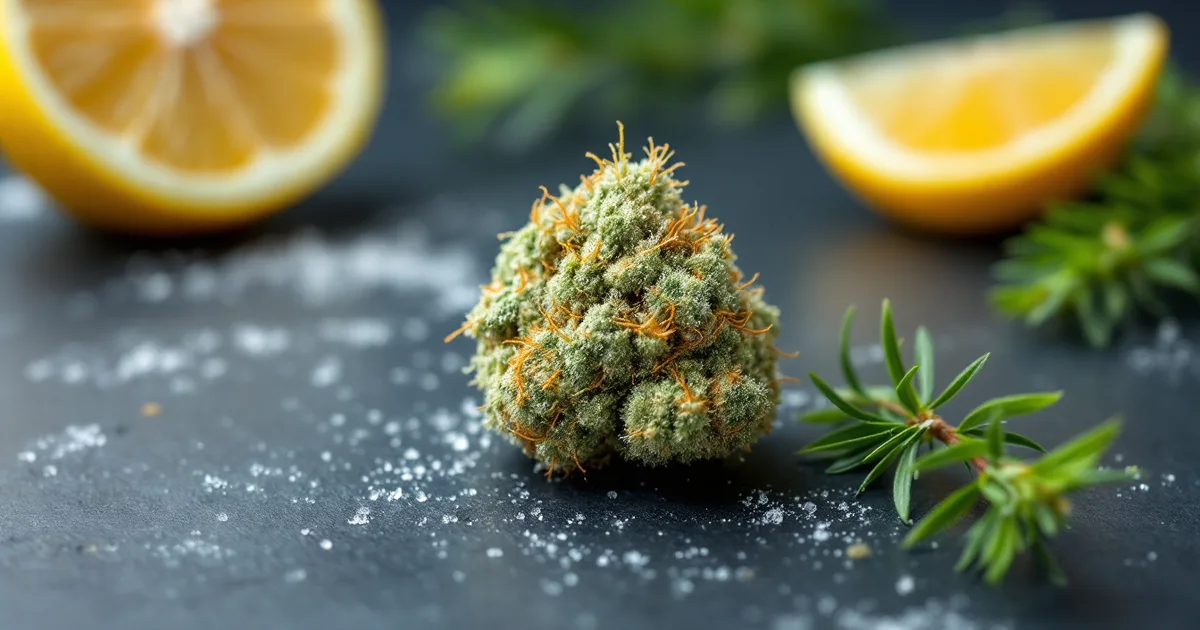

Super Lemon Haze took first place at the High Times Cannabis Cup in 2008 and again in 2009, and its name is a fair summary of the aroma. The Super Lemon Haze strain leads with sharp lemon zest. The chemistry behind that lemon is more interesting than the name suggests, because the terpene that leads its profile in Leafly's lab data is recorded as smelling of sweet pine, not citrus.
This guide covers where the strain came from, what the published terpene data says and where the sources disagree, the effects users report, and how we rebuild it at Entour™ as both a Native® and a Live Derived® blend.
Super Lemon Haze at a glance
| Trait | Super Lemon Haze |
|---|---|
| Type | Sativa-dominant hybrid, listed by the breeder as 70% sativa and 30% indica |
| Breeder | Green House Seed Company, Amsterdam |
| Lineage | Lemon Skunk x Super Silver Haze |
| Awards | 1st place, High Times Cannabis Cup, 2008 and 2009 |
| THC | 19% on Leafly; the breeder quotes 26.33% for its seed line |
| Lead terpenes | Terpinolene and caryophyllene, with limonene or myrcene third depending on the source |
| Aroma and flavor | Lemon zest, sweet-tart citrus, pine, pepper |
| Reported effects | Energetic, focused, uplifted |
| Entour™ blends | Native® and Live Derived® |
What is the Super Lemon Haze strain?
Super Lemon Haze is a sativa-dominant cross of Lemon Skunk and Super Silver Haze, bred by Green House Seeds in Amsterdam. The breeder's own Super Lemon Haze page lists it at 70% sativa and 30% indica and calls it the most famous strain in the Green House catalog. Leafly's strain entry names the same parents and the same breeder, and describes it as a two-time Cannabis Cup winner.
Those two wins came back to back, at the 2008 and 2009 High Times Cannabis Cups. Green House lists more placings after that, including first at the IC420 Growers Cup in 2010 and first at the Seattle Medical Cup in 2012.
Both parents show up in the flavor. The breeder describes the taste as a mix of the two, with the Haze side accentuating the citrus from the Lemon side and adding woodiness and pine-tree freshness of its own. Hold on to that pine. It matters once we get to the lab data.
What does Super Lemon Haze smell like?
Lemon zest comes first, and it is loud. Green House describes a strong lemon-zest flavor that fills the whole palate, followed by the woody, pine-fresh Haze character. Leafly calls the smell zesty, citrusy and a little sweet, and compares the taste to tart, sweet lemon candy.
There is a less polite note underneath. The breeder's page says some people are reminded of what it calls the "cat piss" terpene, blunt cannabis slang for a sharp, pungent funk. Our tasting note for the Live Derived blend lands in a similar place from a kinder direction: "Funky Avgolemono," after the Greek egg-and-lemon soup.
Strip out that funk and the spice, and what is left reads as lemonade rather than Haze.
Super Lemon Haze terpenes: what the lab data shows
The two most-cited terpene rankings for Super Lemon Haze do not match, and the mismatch is useful.
- Leafly, which draws its terpene data from products tested in Leafly Certified labs, lists terpinolene as dominant, followed by caryophyllene and myrcene.
- Green House Seeds names caryophyllene, D-limonene and terpinolene as the most expressed terpenes in its line.
Both put terpinolene and caryophyllene in the top three. They split on which one leads and on the third compound. Neither comes with percentages we could verify, so we stick to the order.
Terpinolene: the pine under the lemon
PubChem's entry for terpinolene records its odor as sweet and pine-like, citing Fenaroli's Handbook of Flavor Ingredients. Our terpinolene profile describes a more layered aroma, with floral, piney, herbal and citrus notes at once. Set that beside the breeder's lemon zest over pine-tree freshness and the match is close.
Caryophyllene: the pepper
Leafly tags caryophyllene as its pepper note. It is the spice that stops Super Lemon Haze from tasting like a soft drink, and it sits in the top three on both lists, so a faithful version needs it.
Limonene, myrcene and ocimene: the moving third
Limonene is the compound most people expect in a lemon strain. PubChem's entry for limonene records its odor as "pleasant lemon-like," and our limonene guide covers its role as the main compound in citrus peel oils. The breeder ranks it in the top three. Leafly's data gives that slot to myrcene, which it tags as herbal.
Ocimene is the third terpene listed on both of our Super Lemon Haze blends. Our ocimene profile describes it as sweet and herbal with tropical and citrus undertones.
Read together, the data suggests the lemon in Super Lemon Haze is a composite. Limonene supplies straight lemon where it shows up, terpinolene adds sweet pine with a floral, citrus edge, and caryophyllene brings the pepper. No single molecule does the job alone.
Why two samples of Super Lemon Haze can test differently
A large US dataset helps explain the disagreement. Smith and colleagues mapped 89,923 commercial flower samples and published the results in PLOS ONE in 2022. They identified three main terpene groups: high caryophyllene-limonene, high myrcene-pinene, and high terpinolene-myrcene.
Read against that study, Leafly's Super Lemon Haze ranking resembles the terpinolene-myrcene group, while the breeder's list sits closer to caryophyllene-limonene. Same name, two chemical neighborhoods. The authors concluded that strain names may be a better marker of chemistry than indica, sativa or hybrid labels, but are still "far from ideal."
Naming is part of the story as well. Pooled data like Leafly's can't tell a true Green House Seeds plant from flower that was simply sold under the name with no real link to it, and even seed-grown plants express their terpenes a little differently in every environment.
That is the practical argument for building from a measured fingerprint instead of an average of published summaries, which we lay out in True To Plant® vs generic strain profiles. A measured fingerprint gives you a fixed target. Internet consensus gives you the confusion above.
Super Lemon Haze effects: what users report
On Leafly, the effects users report most often are energetic, focused and uplifted. The most common negatives are feeling anxious, dry mouth and dry eyes. Green House says it works fast and lasts long, and calls it "very balanced between a physical and a cerebral side," a more body-inclusive picture than the user reports paint.
There is a chemistry angle to the sativa reputation. In the PLOS ONE dataset, the high-terpinolene group held roughly twice as many sativa-labeled products, and half as many indica-labeled ones, as the full population would predict. Terpinolene-heavy flower is more likely than average to carry a sativa label.
Keep the roles straight, though. Terpenes do not produce intoxication on their own; cannabinoids such as THC do. Leafly's own terpene note phrases it carefully: terpenes determine flavor and aroma, and "may also modify" effects. That "may" is doing honest work.
Who Super Lemon Haze suits
For consumers, it suits people who pick a strain by flavor first and want a bright, citrus-led sativa. The reported effects read as daytime. Anyone who finds energetic strains leave them feeling anxious should know that "anxious" is the most common negative in Leafly's user reports.
For brands, Super Lemon Haze is a recognizable name for a citrus SKU, and its terpinolene lead gives it a pine-and-pepper structure that a plain limonene blend lacks. Which tier to build it on depends on the format, covered below.
How Entour™ recreates Super Lemon Haze
Entour™ is the terpene brand of The Werc Shop®, and both of our Super Lemon Haze blends are built on our True To Plant® process. We fingerprint the cultivar at high resolution, then rebuild the profile from natural, non-cannabis botanical ingredients. Both blends list terpinolene as the primary terpene, with caryophyllene and beta-ocimene behind it. Both are lab tested, with an SDS and COA available.
The Native® blend
Native® is our cultivar-specific botanical line. The Native® Super Lemon Haze tasting notes open on lemon rind, blood orange, tangerine peel and clementine, then move to sappy pine cone, a salty breeze, ginger, turmeric and terra-cotta on the exhale. The product page sums up the mood as "Blazing in the sun."
The Live Derived® blend
Live Derived® is our premium tier, described as "Premium terpene formulations crafted to yield a cultivar-specific authentic essence." The Live Derived® Super Lemon Haze is written up as tangy, sweet-tart citrus going toe-to-toe with spicy Haze bass notes. Despite the name, it is botanical too, built from natural non-cannabis ingredients.
Which one fits your product
Our guide to when Live Derived earns its premium gives a clear rule. Pay for it where the terpene does all the sensory work: vape carts and dab-adjacent concentrates, premium infused pre-rolls, and tinctures or low-dose formats with no other flavor to hide behind. Distillate keeps almost nothing of the plant's original aroma, so whatever you add back is the entire experience.
Skip it where the product buries the nuance. Gummies and chocolates bring their own sugar, acid and flavor systems, and beverages lose top notes to emulsification and carbonation. Value carts that sell on price per milligram rarely need it either. Native® is the sensible pick in those formats.
On Super Lemon Haze the premium works out to exactly $1 more per milliliter, from the 30 mL size upward. A 30 mL bottle is $170 for Native® and $200 for Live Derived®, and a liter is $2,650 against $3,650. If you are unsure, the same guide recommends a coded blind test with a panel of 8 to 12 regular users of the category. It also suggests mixing tiers: Live Derived on a flagship cart, Native on the value line.
FAQ
Is Super Lemon Haze indica or sativa?
Super Lemon Haze is a sativa-dominant hybrid. Green House Seeds lists it at 70% sativa and 30% indica, and Leafly also classes it as sativa-dominant. Treat the label as a rough guide: a 2022 study of nearly 90,000 US samples found that indica, sativa and hybrid labels do not reliably predict a product's chemistry.
What terpenes are in Super Lemon Haze?
Terpinolene and caryophyllene sit in the top three in both Leafly's lab data and the breeder's own list. Leafly ranks terpinolene first and myrcene third, while Green House leads with caryophyllene and includes D-limonene. Our Native® and Live Derived® blends list terpinolene, caryophyllene and beta-ocimene.
What does Super Lemon Haze smell like?
Sharp lemon zest first, sweet-tart citrus close behind, then woody pine and a peppery Haze spice. Some people also pick up a pungent funk under the citrus, which the breeder itself acknowledges.
How strong is Super Lemon Haze?
Leafly lists it at 19% THC, while Green House quotes 26.33% THC for its seed line. Potency varies with the grower, the phenotype and the batch, and it comes from cannabinoids rather than terpenes. A terpene blend recreates the aroma and flavor, not the THC.
Are Entour™ Super Lemon Haze blends made from cannabis?
No. Both the Native® and Live Derived® versions are botanical, built with our True To Plant® process from natural, non-cannabis ingredients. Live Derived is the name of a premium tier, not a description of the source material.
Where to take this next
If Super Lemon Haze is headed for your next citrus or sativa SKU, start with the Native® Super Lemon Haze blend and test it against the Live Derived® version in your own hardware before you choose a tier. For volume pricing or a custom match, talk to our formulation team.
About the author: The Entour™ team is a division of The Werc Shop®, the first commercial cannabis laboratory to test for terpenes back in 2011. The team formulates True To Plant® terpene profiles for licensed cannabis brands across the US, Canada, and tribal markets.
Read More
Banana Kush Strain: Terpene Profile, Flavor and Effects
The breeder behind the Banana Kush strain named it for its "faint banana smell." Leafly describes the same cross as one that "tastes and smells like a bushel of fresh bananas." Bot
SFV OG Strain: Terpene Profile, Aroma and Effects
In 2015, our parent lab, The Werc Shop®, published a paper that grouped 494 California flower samples by their chemistry instead of by the names on their labels. When the authors pulled out the OG-typ
Permanent Marker Strain: Terpene Profile, Aroma and Effects
In August 2022, the Permanent Marker strain was on 10 store menus in the US. By November 2023 it was on 587, a 59x jump that Leafly says made it the fastest-growing new strain on US menus that year. L