


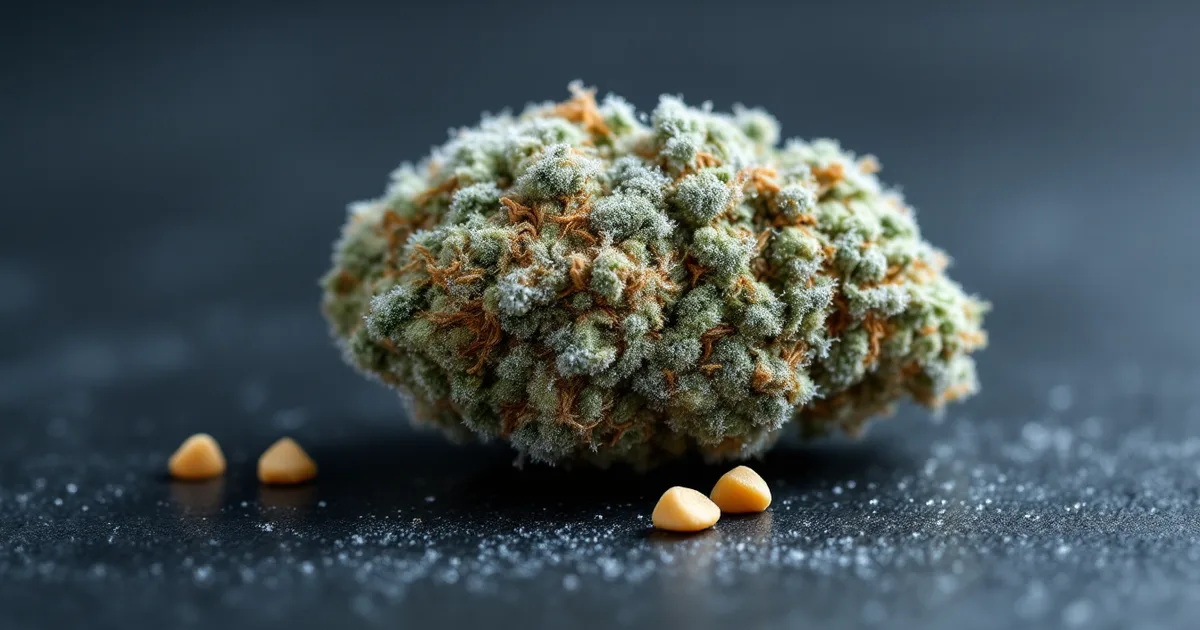

Hindu Kush is a pure indica landrace, named after the mountain range it comes from, which straddles Afghanistan and northwest Pakistan. It smells earthy and woody, with a sweet sandalwood note that Leafly, Weedmaps and the seed bank Sensi Seeds all single out. Lab data puts caryophyllene, limonene and myrcene at the top of its terpene profile, though sources disagree on the order.
Below we separate history from legend, walk through the lab data and reported effects, and show how we build our Native® Hindu Kush blend.
Three ways to try the Hindu Kush profile
- Native® Hindu Kush, from $35 for 5 mL. Our cultivar blend: caryophyllene first, then limonene and myrcene, with sandalwood and licorice root in the aroma notes.
- Native® Bubba Kush, from $35. Its page lists the same lead pair, caryophyllene then limonene, with bisabolol third where Hindu Kush has myrcene. A useful side-by-side.
- Build Your Own sample pack: any six 5 mL blends in one $80 box. Pair Hindu Kush with Bubba Kush and Afghan Kush and you can compare three Kush profiles in an afternoon.
Hindu Kush strain at a glance
| Trait | Hindu Kush |
|---|---|
| Type | Indica landrace (Leafly, Sensi Seeds) |
| Bred by | No breeder. Sensi Seeds has kept a seed line since the 1980s |
| Year | None; grown in the region long before any seed catalog |
| Parents | None named |
| Dominant terpenes | Limonene, caryophyllene, pinene (Leafly); caryophyllene, myrcene, limonene (The Cannigma) |
| Aroma and flavor | Earthy, woody, sweet sandalwood, with pine and spice |
| Reported effects | Sleepy, relaxed, hungry (Leafly); relaxed, sleepy, happy (Weedmaps) |
| THC | 19% on Leafly; 12.76 to 20.9% in lab results compiled by The Cannigma |
| Entour™ blend | Hindu Kush, Native® line: caryophyllene, limonene, myrcene |
What is the Hindu Kush strain?
Hindu Kush is a landrace: a cannabis population shaped by generations of local farming and a hard mountain climate, not a cross made by a named breeder. That is why no strain database we checked gives it parents, a breeder or a release year.
Botanists file it in a specific group. In a 2020 PhytoKeys paper, John McPartland and Ernest Small trace the drug plants the trade calls "Indica" to Central Asia, naming Afghanistan, Pakistan and Turkestan, and classify them as Cannabis sativa subsp. indica var. afghanica. The 19th and early 20th century herbarium specimens of the variety they examined, from Afghanistan and northwest Pakistan among other places, came from plants grown for sieved hashish.
That history fits the plant's build: short, broad-leaved and coated in resin. Leafly's Hindu Kush page credits the harsh climate for its thick layer of trichomes, and Sensi Seeds calls its line "predestined for the extraction of kief or hashish."
History and lineage: what's documented and what's legend
The region
The Encyclopaedia Iranica places the range partly in Afghanistan and partly in Pakistan, with the border following the main ridge in the east. Leafly puts its length at 500 miles. McPartland and Small place wild-type relatives across the Hindu Kush, Karakoram, Pamir and Tian Shan.
The legends
Two stories repeat on almost every strain page. Sensi Seeds says the plant hardened on windswept slopes "over thousands of years." The Cannigma repeats the tale of hippie trail travelers carrying seeds to the US in the 1960s and 70s. Both are plausible, but neither comes with a seed record anyone can check, so read them as legend. The firmest dated evidence comes from those herbarium specimens.
The seed line and family tree
Sensi Seeds says it has held its Hindu Kush genetics since the 1980s without hybridizing them, selecting within the line's own gene pool. Its Hindu Kush seed page gives a flowering time of 45 to 50 days, and Sensi also crossed the line with Skunk #1 to make Skunk Kush. Leafly lists OG Kush and Purple Kush as Hindu Kush's children, and describes Master Kush as bred from two landraces from different parts of the Hindu Kush region.
OG Kush is where sources split. Leafly's OG Kush page says a Northern California strain was "supposedly crossed with Chemdawg, Lemon Thai and a Hindu Kush plant from Amsterdam" in early 1990s Florida. Leafly's 100 best strains list calls the Chemdog and Hindu Kush parentage a "popular myth." We regard the link as unproven, as does our OG Kush terpene profile, which calls that pedigree debated.
Hindu Kush vs Afghan Kush
Both names point at the same mountains, and sellers blur them: Weedmaps lists "Afghan Hindi Kush" as an alias for Hindu Kush. The cleanest line we can draw is in our own catalog. Native® Afghan Kush is built myrcene first, then caryophyllene and alpha-pinene. Native® Hindu Kush puts caryophyllene in front, then limonene and myrcene, so it comes across spicier with more citrus lift, while Afghan Kush reads earthier and heavier. For that strain's history and effects, read our Afghan Kush strain guide.
What does Hindu Kush smell like?
Sandalwood comes up again and again. Leafly describes "a subtle sweet and earthy sandalwood aroma." Sensi Seeds calls the flavor sweet and earthy sandalwood, compares the smell, which gets stronger once flowering starts, to "wet pine trees," and claims no other variety gives off such a pronounced aniseed and sandalwood note. Leafly users tag it earthy, woody and spicy/herbal. On Weedmaps, 40% of flavor reports say sweet, 40% woody and 21% pine.
Leafly's terpene tags explain part of that: pepper for caryophyllene, citrus for limonene, pine for pinene. The woody, incense-like depth is harder to place. McPartland and Small report that Afghan-type plants uniquely express sesquiterpene alcohols such as guaiol and the eudesmols. Neither Leafly's panel nor The Cannigma's Hindu Kush data lists them, so a three-terpene summary probably misses part of the smell.
Hindu Kush terpenes: what the lab data shows
Caryophyllene, limonene and myrcene lead, but the order depends on whose data you read.
Leafly's numbers, taken from lab-tested products, put limonene at the top, caryophyllene next and pinene third. The Cannigma's Hindu Kush page, which averages lab results from several sources, puts caryophyllene on top at 0.44%, with myrcene and limonene tied at 0.31% and humulene at 0.23%.
The ranges explain the split. In The Cannigma's data, myrcene ran from 0.02 to 0.83% and limonene from 0 to 0.8%, while caryophyllene held between 0.16 and 0.61%. It was the only one of the three that never fell near zero. Yet limonene and myrcene each reached 0.8% in some samples, above caryophyllene's highest reading, so either can look dominant on a single test.
A caution on all of these numbers: a strain name on a retail label is a seller's claim, not a genetic test. Hindu Kush flower in a US dispensary may come from a seed line crossed somewhere along the way, or from a plant with no real tie to the mountain landrace, and any database pooling results under that name inherits the noise.
Caryophyllene
The peppery, woody backbone, and the steadiest of the three. It is a sesquiterpene with 15 carbon atoms against 10 for limonene and myrcene, a heavier molecule. Humulene shares its C15H24 formula and tends to travel with it. Our caryophyllene page goes further into the chemistry.
Limonene
The citrus top note and Leafly's number one for this strain. It swings as widely as myrcene, which may explain why some user reviews mention lemon in an otherwise earthy indica.
Myrcene
The earthy, musky base, tied with limonene in The Cannigma's averages and third in our blend. Behind these three, pinene likely carries the wet pine note and humulene adds an herbal edge.
Hindu Kush strain effects people report
Users mostly describe Hindu Kush as calming and sleepy. On Leafly, where 1,279 people have reported effects, the top three are sleepy, relaxed and hungry. Weedmaps users report relaxed (44%), sleepy (30%) and happy (27%). Sensi Seeds pitches its line for the evening or just before bed. The most common complaints on Leafly are dry mouth and dry eyes.
These are user reports, not measured outcomes. Terpenes are not intoxicating by themselves. How strong a product feels comes from its cannabinoids, while the terpene profile shapes the aroma and is associated with the character people describe.
Who the Hindu Kush profile suits
Consumers who prefer earthy, spicy, woody profiles to candy or fuel, mostly in the evening, are its natural audience.
For brands it is a heritage SKU: a Kush with a landrace story and without the lemon-pine-fuel nose Leafly describes for OG Kush. It fits pre-rolls and hash-style products, and our combustion page puts typical pre-roll infusion at 1 to 3% by weight. On a lab report, look for caryophyllene at or near the top, limonene and myrcene close behind, and some pinene or humulene below. A result that reads as straight lemon has lost the wood and spice that make the profile recognizable.
How Entour™ recreates the Hindu Kush profile
Our Hindu Kush sits in the Native® line (SKU F00084). On its product page, caryophyllene carries the primary tag, with limonene and myrcene after it, the same top three as The Cannigma's averaged ranking. We make no claim that the blend matches the percentages in any one lab report.
The page's aroma notes run brighter than most flower descriptions: lemon drops, sweet orange, yellow blossoms and sandalwood on the tongue; citrus-soaked espresso beans, gum-ball machine candies and licorice root on the nose. The sandalwood matches Leafly and Sensi Seeds, and the licorice root sits close to the aniseed Sensi Seeds describes. The listed vibe is "exotic supplements and shisha sessions."
Like all 150+ of our strain blends, it is a True To Plant® profile, reconstructed from real cultivar data by The Werc Shop®, the lab that started testing cannabis for terpenes in 2011. We will send its COA, SDS and TDS on request. Sizes start at 5 mL for $35 and go up to a liter for $2,650. One small bottle is a normal order.
FAQ
Is Hindu Kush indica or sativa?
Indica. Leafly and Sensi Seeds both list it as pure indica, and botanically it belongs with the Afghan-type plants McPartland and Small call var. afghanica. They also note that 50 years of crossbreeding has blurred the indica and sativa labels on today's hybrids, so the terpene profile tells you more than the label.
What terpenes are in Hindu Kush?
Caryophyllene, limonene and myrcene lead, with pinene and humulene behind. Leafly ranks limonene, caryophyllene and pinene as its top three, while The Cannigma's averaged data puts caryophyllene first. Our Native® blend runs caryophyllene, limonene, myrcene.
What does Hindu Kush smell like?
Earthy, woody and sweet, with sandalwood as the signature note and touches of pine, spice and aniseed. Samples high in limonene can smell of lemon.
How strong is Hindu Kush?
Leafly lists 19% THC, and the lab results The Cannigma compiled ranged from 12.76 to 20.9%, averaging 17.14%. Potency varies by grower and batch, so go by the label in front of you. Terpenes play no part in that number.
Is OG Kush descended from Hindu Kush?
Possibly, but nobody has proved it. Leafly's OG Kush page says it was "supposedly" crossed with a Hindu Kush plant, while Leafly's top 100 list calls that parentage a popular myth. File it under Kush legend.
Where to take this next
The quickest test is Native® Hindu Kush at $35 for 5 mL. To smell it against its relatives, put it in an $80 Build Your Own sample pack with Bubba Kush and Afghan Kush. Our strain guides cover more profiles. Brands that need a Hindu Kush profile held to a spec or scaled to liters can talk to our formulation team.
About the author: The Entour™ team is a division of The Werc Shop®, the first commercial cannabis laboratory to test for terpenes back in 2011. The team formulates True To Plant® terpene profiles for licensed cannabis brands across the US, Canada, and tribal markets.
Read More
Tahoe OG Strain: Terpenes, Lineage and Effects
Tahoe OG is a cut of OG Kush, one selected plant kept going as clones, named for the Lake Tahoe area of California where it is said to have surfaced. It smells of lemon and pine over damp earth. Lab d
Tangie Strain: Terpenes, Smell, Effects and Lineage
Tangie is a sativa-dominant strain bred in California from California Orange and a Skunk line, and it smells loudly of tangerines. A family grower called Crockett created it in the early 2000s, and DN
Headband Strain: Origins, Terpenes, Diesel Aroma and Effects
Headband is a hybrid cannabis strain bred from OG Kush and Sour Diesel, named for the band of pressure many people say they feel around the forehead. It smells of diesel and lemon over an earthy base.