


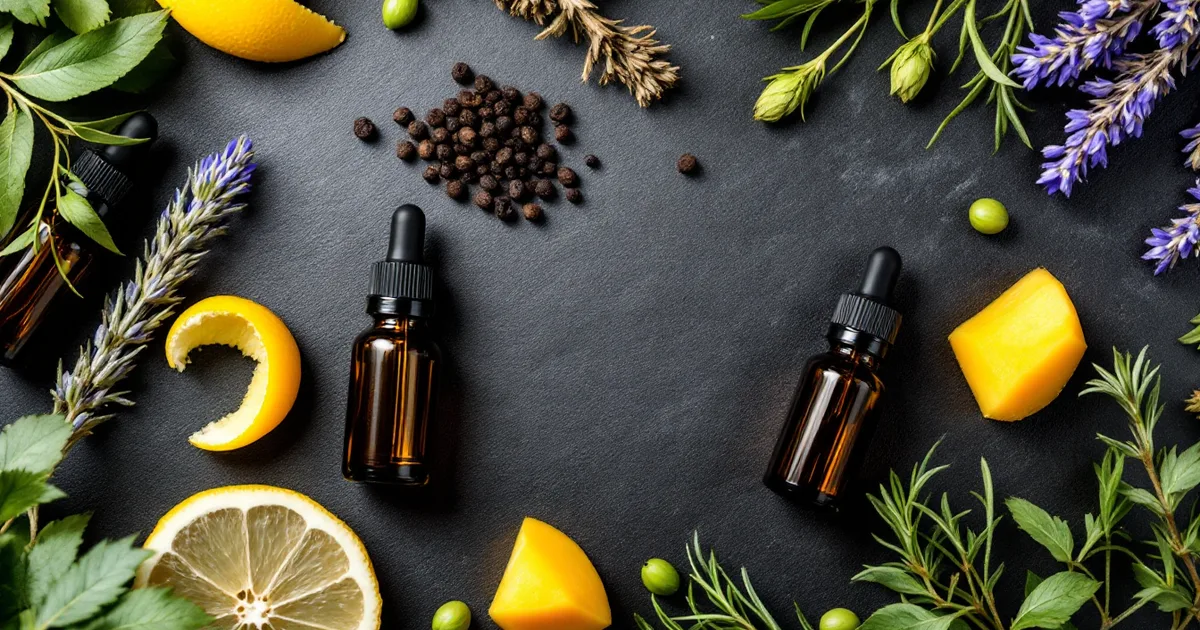

A terpene chart lines up the aromatic compounds in cannabis so you can compare them at a glance: what each one smells like, where else it grows, when it boils, and what research has tied it to. Ours covers 18 terpenes. Myrcene, caryophyllene and limonene are the big three: they showed the highest average levels in a study of 89,923 lab-tested flower samples from six US states.
Two things set this chart apart. Every boiling point comes from PubChem, the NIH's open chemistry database, at normal atmospheric pressure (760 mm Hg). And the last column names the Entour™ blends each terpene leads, so you can smell the row you are reading.
Three blends that put the chart in a bottle
That flower study sorted THC-dominant cannabis into three main terpene groups: caryophyllene with limonene, myrcene with pinene, and terpinolene with myrcene. Our Native® line has a blend whose top two terpenes match each group. Each starts at $35 for a 5 mL bottle.
- Purple Punch leads with caryophyllene, then limonene: pepper and spice under grape candy and blueberry muffin. In the study, 96% of Purple Punch products sat in the caryophyllene and limonene group.
- Blue Dream leads with myrcene, then alpha-pinene: earthy and herbal with a piney lift. 88.5% of Blue Dream products landed in the myrcene and pinene group.
- Dutch Treat™ leads with terpinolene, backed by myrcene and ocimene, so pine and citrus run up front. 85.9% of flower sold under that name fell in the terpinolene group.
Want more than three? The Build Your Own sample pack puts six blends of your choosing on the bench, in 5 mL bottles, for $80.
One caution with any strain-level data like this: retail strain naming is loose, so figures filed under a name can come from flower with no real link to the original cultivar.
The terpene chart
Read across a row for one terpene. Boiling points are shown as a range where PubChem's sources differ, rounded to whole degrees. If PubChem only lists a figure measured under vacuum, we say so rather than print it as a normal-pressure value.
The research column is deliberately cautious. Most of it draws on a review by Ethan Russo (British Journal of Pharmacology, 2011), and most of that work was done in cells or animals. "Little cannabis research" means we found too little cannabis-specific work to summarize honestly.
| Terpene | Aroma | Also found in | Boils at, °C (°F) | What research has linked it to | Entour™ blends led by it |
|---|---|---|---|---|---|
| Myrcene | Earthy, musky, herbal | Mango, hops, lemongrass, bay | 166 to 167 (331 to 333) | Relaxed muscles and lengthened drug-induced sleep in mice at high doses; Russo ties it to "couch-lock" | Grand Daddy Purple and Nanner Kush™, among others |
| Caryophyllene | Peppery, spicy, woody | Black pepper, cloves, oregano, hops | 256 to 259 (493 to 498) | Binds the CB2 receptor, not CB1, in lab tests | Wedding Cake and Gelato, among others |
| Limonene | Lemon-like citrus peel | Orange, lemon and grapefruit peel, dill, caraway | 175 to 178 (347 to 352) | Less anxious behavior in mouse studies; one small human trial alongside THC | OG Kush and Key Lime Pie, among others |
| Terpinolene | Sweet pine, floral, citrus | Orange and mandarin peel oils, lilac | 183 to 187 (361 to 369) | Its chemotype group held about twice the expected share of Sativa-labeled flower | Jack Herer and Pear Herer®, among others |
| Alpha-pinene | Pine, turpentine | Pine, rosemary, eucalyptus | 155 to 156 (311 to 313) | Inhibits an enzyme linked to memory, in lab studies | Northern Lights #2 |
| Beta-pinene | Dry pine, woody, resinous | Pine, coriander, cumin | 163 to 166 (325 to 331) | Rises and falls with alpha-pinene; little research of its own | None lead; third in Northern Lights #2 |
| Linalool | Floral, lavender, bergamot | Lavender, coriander, bergamot | 194 to 200 (381 to 392) | Made mice less active when inhaled | Lavender Kush and our Sedate Effects blend |
| Humulene | Hoppy, woody, earthy | Hops, sage, ginger, coriander | Not reliably published | Rises and falls with caryophyllene; little research of its own | None lead |
| Ocimene | Sweet, herbal, woody | Mint, tea, rosemary | 174 to 177 (345 to 351) | Little cannabis research | None lead; third in Jack Herer and Dutch Treat™ |
| Nerolidol | Woody, floral, fresh bark | Jasmine, tea tree, lemongrass, orange peel | 275 to 277 (527 to 531) | Sedating in older animal work; studied as a skin-penetration aid | None lead; third in Wedding Cake |
| Bisabolol | Soft floral, honey | German chamomile | About 314 (597), one source | Little cannabis research | None lead; third in Purple Punch |
| Valencene | Sweet orange | Valencia oranges, hops | Not reliably published | Little cannabis research | None lead |
| Geraniol | Rose, sweet floral | Rose, geranium, palmarosa, lemongrass | 229 to 230 (444 to 446) | Little cannabis research | None lead |
| Eucalyptol | Cooling, camphor, mint | Eucalyptus, cajeput | 176 to 177 (349 to 351) | Little cannabis research | None lead |
| Camphene | Camphor, fir, damp woods | Fir, hemlock, camphor | 154 to 161 (310 to 322) | Little cannabis research | None lead |
| Alpha-terpineol | Floral, lilac | Pine oils, cardamom, marjoram, lime | 217 to 221 (423 to 430) | Made mice less active when inhaled | None lead |
| Borneol | Piney, camphor | Ginger, thyme, coriander seed, citrus peel | 212 (414) | Little cannabis research | None lead |
| Delta-3-carene | Sweet, turpentine | Pine oils, mandarin | 169 to 178 (336 to 352) | Little cannabis research | None lead |
Our catalog holds 150+ blends. The last column names examples, going by the dominant terpene listed on each product page.
Why terpene charts disagree on boiling points
Pressure. A liquid boils at a lower temperature under vacuum, so heavier terpenes are often measured at reduced pressure. Those figures are accurate, but only with the pressure attached. Copied onto a chart without it, they mislead.
Caryophyllene is the clearest case. Its PubChem record lists 264 to 266°F at 14 mm Hg, about 130°C, alongside 256 to 259°C at normal pressure (760 mm Hg). Drop the pressure and caryophyllene looks more volatile than limonene. In fact it is one of the most heat-tolerant terpenes on the chart.
Four more rows carry the same trap. Here are all five side by side:
| Terpene | Vacuum figure in PubChem | Pressure | Normal-pressure value in PubChem |
|---|---|---|---|
| Caryophyllene | 129 to 130°C | 14 mm Hg | 256 to 259°C |
| Nerolidol | 114°C | 1 mm Hg | 275 to 277°C |
| Bisabolol | 151 to 152°C | 12 mm Hg | About 314°C |
| Valencene | 123°C | 11 mm Hg | None listed |
| Humulene | 99 to 100°C | 3 mm Hg | None listed |
Boiling point also isn't the moment a terpene starts to leave. Terpenes evaporate at room temperature; PubChem puts myrcene's vapor pressure at about 2 mm Hg at 25°C. Read the column as a rough guide to which compounds escape first, not as a cutoff. Lower-boiling monoterpenes such as pinene and myrcene go early, which is why an uncapped bottle loses its top notes before anything else.
The terpene wheel: aroma families
A terpene wheel sorts compounds by smell instead of by chemistry. It answers "what will this profile smell like?" before you read a single number. Our catalog is grouped the same way, so each family below links to the blends it leads.
| Aroma family | Terpenes in it | Where it leads in our catalog |
|---|---|---|
| Citrus | Limonene, valencene, the citrus edge of terpinolene | Our citrus blends, every one limonene-led |
| Spicy and gassy | Caryophyllene, humulene | Our spicy and gassy blends, all caryophyllene-led |
| Earthy and herbal | Myrcene, humulene | Our earthy and herbal blends, all myrcene-led |
| Fruity and fresh | Terpinolene, ocimene | Our fruity and tropical blends, all terpinolene-led |
| Pine and resin | Alpha-pinene, beta-pinene, delta-3-carene, camphene | Northern Lights #2 |
| Floral | Linalool, geraniol, alpha-terpineol, nerolidol, bisabolol | Lavender Kush, Sedate Effects |
| Cool and camphor | Eucalyptol, borneol, camphene | No lead blends; these work in the background |
Some compounds belong to two families. Humulene smells earthy in hops and spicy next to caryophyllene. Terpinolene manages pine, flowers and citrus at once, which makes it hard to describe and easy to recognize.
Across our 150+ blends, limonene leads more of them than any other terpene. Pinene and linalool lead only a handful between them, which makes those blends the place to start if pine or floral is the note you are after.
How to read a terpene chart or a lab terpene panel
People use "terpene chart" for three different things. One is a reference chart like ours. One is a wheel. The third is the chart for a specific product: a lab panel, or the pie or bar graphic a brand builds from it. That third kind is the one you buy from, so it pays to read it properly.
Check the unit first. Labs report terpenes as percent by weight (% w/w), milligrams per gram (mg/g) or parts per million (ppm). The six labs in the flower study used all three. The conversion is easy: 1% equals 10 mg/g equals 10,000 ppm. A panel reading 5 mg/g and one reading 0.5% describe the same amount.
Absolute or relative. A lab panel gives each terpene as a share of the whole sample. Pie and wheel graphics often show each terpene as a share of the terpenes alone. The gap is large. In the flower study, total terpenes averaged 2% by weight and single terpenes rarely topped 0.5%. So a terpene at 0.5% of a flower with 2% total terpenes fills a quarter of the pie while making up half a percent of the bud.
Total terpenes is a sum of what was tested. Each lab runs a fixed list of compounds, and anything off the list can't appear. Across six labs, the flower study found 14 terpenes measured consistently. Compare totals only between panels that tested the same list.
"<LOQ" and "ND" are not zero. Washington's lab rules define the limit of quantitation (LOQ) as the smallest amount a method can measure "with acceptable precision and accuracy." A result below it gets reported as under the LOQ. ND means not detected: the signal sat below the limit of detection, where the lab can't reliably tell it apart from zero. Either way the compound may still be present, and each lab sets its own limits.
Read the top three, not just the top one. The dominant terpene sets the first impression. The second and third decide whether a myrcene-led profile reads as fruity, piney or peppery. For the rest of a certificate, from batch numbers to the safety panel, our guide to reading a terpene COA goes line by line.
What a terpene chart can't tell you
How a product will make you feel. The effect column is mostly cell and animal work. The CB2 finding for caryophyllene came from cell lines and mice. Controlled human studies are rare. In one 2024 double-blind study, 20 adults inhaled THC with and without limonene. Limonene alone produced nothing that differed from placebo. Paired with 30 mg of THC, 15 mg of limonene lowered people's "anxious/nervous" and "paranoid" ratings compared with the same THC dose alone. The authors call it some of the first clinical support for the entourage effect, and also say that dose and ratio are unlikely in ordinary flower. Terpenes on their own do not get you high.
Whether a strain name means much. In the flower study, strain names tracked chemistry better than chance on average. For some names, though, products were no more alike than randomly labeled flower. The Indica, Sativa and Hybrid labels did not consistently line up with chemistry.
How fresh the material is. Limonene, myrcene and pinene fade with drying and storage, which leaves caryophyllene with a bigger share, as Russo's review notes. A chart built from fresh plants and a panel from a jar that has sat for months can disagree and both be right.
Whether a blend copies the whole plant. A chart lists the big peaks, but a cultivar's character also lives in the small ones. Our True To Plant® process rebuilds each profile from real cultivar data, with consistency checked by GC-MS. Our parent lab, The Werc Shop®, has run terpene panels since 2011. See how that compares with a peaks-only approach in True To Plant® vs generic strain profiles.
FAQ
What is a terpene chart?
It is a reference table that sets terpenes side by side by aroma, natural sources, boiling point and the effects research has linked them to. The term also covers terpene wheels, which group compounds by smell, and the panel or graphic that shows one product's terpene breakdown.
What are the most common terpenes in cannabis?
Myrcene, caryophyllene and limonene. In a 2022 analysis of 89,923 flower samples from six US states, those three showed the highest average levels. The chart above covers them and 15 more you will meet on lab panels and product pages.
How many terpenes are in cannabis?
More than 200 terpenoids have been reported in the plant, according to Russo's 2011 review. Lab panels measure a much shorter, fixed list, and only a handful turn up in meaningful amounts in any one flower.
What is a terpene wheel?
A terpene wheel groups terpenes into aroma families such as citrus, earthy, spicy, fruity, pine, floral and cooling. It tells you roughly what a profile will smell like before you look at any numbers. One compound can sit in two families.
Why do terpene charts list different boiling points?
Mostly because some figures were measured under vacuum and printed without the pressure. Caryophyllene boils at 256 to 259°C at normal pressure, but PubChem also lists about 130°C at 14 mm Hg. That lower number turns up on charts as if it were the normal value.
Do terpenes get you high?
They don't. On their own, terpenes shape smell and taste and carry no intoxicating effect. Caryophyllene binds the CB2 receptor in lab studies, but not CB1, the receptor behind THC's psychoactive effects.
Where to take this next
Pick the row you like best and smell it. Every Native® and Inspired® blend starts at $35 for 5 mL, and a sample pack puts six side by side for $80. Making a product? Talk to our team about a profile for your format. We send COA, SDS and TDS paperwork whenever you ask for it.
About the author: The Entour™ team is a division of The Werc Shop®, the first commercial cannabis laboratory to test for terpenes back in 2011. The team formulates True To Plant® terpene profiles for licensed cannabis brands across the US, Canada, and tribal markets.
Read More
How to Choose a White Label Terpene Supplier: 12 Questions to Ask
A white label terpene supplier formulates the terpene blend and sells it to you, and your brand is the only name on the finished product. To choose one, put the same twelve questions to every candidat
What Is HTE? High Terpene Extract, Terp Sauce and HTFSE Explained
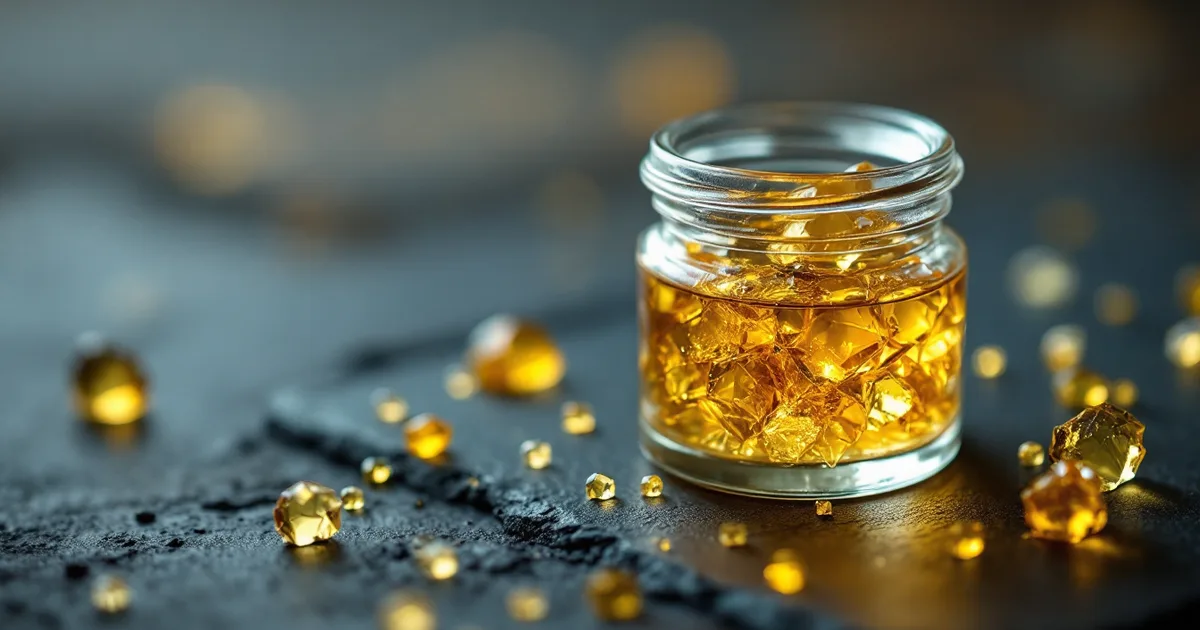
HTE stands for high terpene extract. It is the runny, aromatic fraction of a hydrocarbon cannabis extract, the "sauce" that THCA crystals form in, collected and sold as a product of its own.
Live Resin vs Distillate: How They Differ and Where Distillate Gets Its Flavor
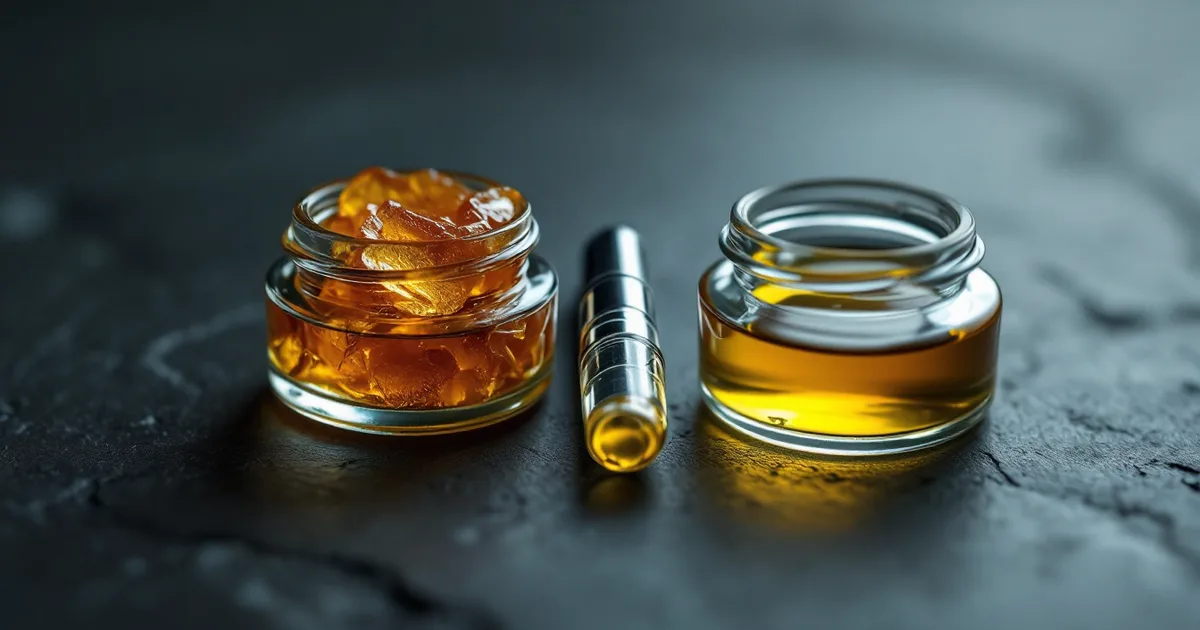
Live resin is a cannabis extract made from plants frozen right after harvest, so it holds on to much of the terpene profile the living plant had. Distillate is a refined oil: a crude extract is distil