


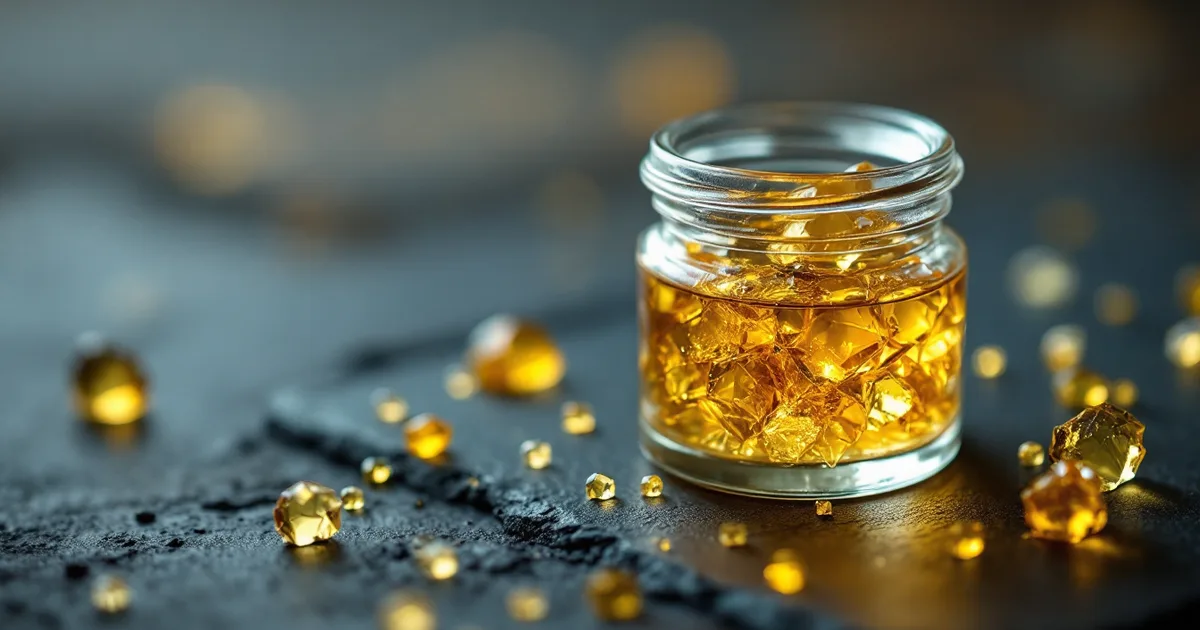

HTE stands for high terpene extract. It is the runny, aromatic fraction of a hydrocarbon cannabis extract, the "sauce" that THCA crystals form in, collected and sold as a product of its own. It is built around terpenes, but it is still a cannabis concentrate: it carries cannabinoids, it changes with every harvest, and in licensed markets it is regulated as cannabis.
That last part is why brands ask us about it. HTE gives a cart the smell of the actual plant, and it brings THC, harvest variation and licensing along with it. A botanical terpene blend gives you one flavor that repeats batch after batch, with no cannabinoids in the bottle.
Three blends to test against your HTE
If flavor is what you want from HTE, put it side by side with a blend in your own hardware. Three places to start:
- Pineapple Express - Live Derived®: 2 mL from $62.50. A myrcene-led profile from the premium tier. Our catalog describes these as "premium terpene formulations crafted" with one goal, "to yield a cultivar-specific authentic essence." We suggest it for a flagship cart, the SKU where a brand might otherwise reach for HTE. Despite the name, Live Derived® is not made from live resin, which contains cannabinoids; the blends include hemp essential oils. Ships to US addresses only.
- Jack Herer (Native®): 5 mL from $35. A terpinolene-forward True To Plant® profile, rebuilt from real cultivar data and priced for the value line.
- Build Your Own Sample Pack: six bottles of your choosing for $80. Live Derived® picks come as 2 mL and everything else as 5 mL, with no more than two of the same blend. It is the cheapest way to line several profiles up against the HTE you use now.
What HTE actually is
HTE is not a terpene isolate, and it is not a blend. It is a whole cannabis extract split in two: the crystallized cannabinoid fraction on one side, the liquid, terpene-heavy fraction on the other. HTE is the liquid.
How much terpene it holds varies more than most spec sheets admit. Cannabis Tech puts high terpene full spectrum extract at 13 to 40% terpenes, with a good batch holding up to 50% THCA. The same article concedes the concentrate industry "isn't on the same page" about definitions, so one producer's HTE can look quite different from another's.
By those figures, HTE can carry as much cannabinoid as terpene, or more. "High terpene" means high for a concentrate, not mostly terpene.
How HTE is made
HTE usually comes out of hydrocarbon extraction, in three stages.
- Cold extraction. Flower, usually fresh frozen, is washed with a light hydrocarbon solvent such as butane or propane, under pressure and at sub-zero temperatures. The cold keeps volatile terpenes in and waxes and fats out.
- Separation. Rather than purging all the solvent at once, the extractor lets THCA come out of solution. The older method, called jar tech or diamond mining, rests a lightly purged extract in jars for two to three weeks while crystals grow. Newer isolation systems chill the extract to around minus 45°C (minus 49°F) and agitate it, so THCA drops out as powder and small crystals that get filtered off.
- Collection. The liquid left behind is the HTE. It is drawn off the crystals and purged of solvent on its own.
What comes out depends on what went in. Cannabis Tech calls the starting flower's terpene and cannabinoid profile critical to the result, and notes that some harvests produce no diamonds at all. Extraction can preserve a crop's aroma. It cannot add aroma the crop never had.
HTE, HTFSE, terp sauce and terp sugar
Sellers use these names loosely, but this is how they are generally meant.
| Term | What it refers to | Texture | Carries cannabinoids? |
|---|---|---|---|
| HTE (high terpene extract) | The terpene-rich liquid fraction of a cannabis extract | Runny to syrupy | Yes |
| HTFSE (high terpene full spectrum extract) | HTE from a single extraction, with nothing added back | Oily, sauce-like | Yes, up to 50% THCA in a good batch |
| HCFSE (high cannabinoid full spectrum extract) | The crystal fraction from the same run | Sugary or diamond-like | Yes, mostly cannabinoid |
| Terp sauce, HTE sauce | Trade names for HTE or HTFSE, often sold with THCA crystals in it | Syrupy, sometimes with crystals | Yes |
| Terp sugar | Crystals and terpene-rich liquid held together | Like wet sugar | Yes |
HTFSE is the strictest term. Leafly's glossary credits it to Dr. Daniel Hayden of the Oregon extraction company Extractioneering. Cannabis Tech adds that some producers put terpenes or THCA diamonds back in afterward, and that many people would not call the result a true HTFSE.
Terp sauce is the name most buyers use, and Leafly ties it to the same HTFSE label. In practice, "HTE", "HTE sauce" and "terp sauce" usually point at the same material. Terp sugar is named for texture rather than process: semi-crystalline, like sugar sitting in a liquid that has not dissolved it.
How HTE is used: dabs and vape carts
Sauce gets dabbed on its own or with its crystals, which is where "diamonds and sauce" comes from.
In carts, HTE is the flavor half of a recombined oil. Extractors mix it back with decarboxylated THCA isolate, often called "liquid diamonds", or with distillate. The base supplies the cannabinoids; the HTE supplies smell, taste and some thinning. Since terpenes thin cannabis oil, the ratio has to suit the hardware, and overdoing it leads to leaking and flooding, as our vape application page explains.
That page puts a terpene top-up for live resin carts, which already carry native terpenes, at around 3 to 5% by weight. If you sell a product as live resin or cannabis-derived, check your state's labeling rules before adding anything to it.
HTE vs live resin
Live resin is defined by what goes in: plant material frozen at harvest rather than dried first, then extracted. HTE is defined by which fraction comes out. The two overlap heavily. Cannabis Now reports that most large sauce diamonds start as live resin, so a lot of the HTE on the market is the liquid side of a live resin run. HTE can come from dried flower as well, though most HTFSE producers start with fresh frozen.
Freezing matters because drying costs terpenes. In work cited by Bueno and colleagues in the Journal of Cannabis Research, cannabis buds that were air dried and stored for one week, one month and three months had lost 31%, 45% and 55% of their terpene content compared with fresh buds.
Our guide to live resin vs distillate covers how live resin performs in a cart.
HTE vs cannabis-derived terpenes vs botanical blends
| HTE | Cannabis-derived terpenes (CDT) | Botanical terpene blend | |
|---|---|---|---|
| Source | Terpene-rich fraction of a cannabis extract | Terpenes separated from cannabis | Terpenes from non-cannabis plants, built to a cultivar profile |
| Cannabinoids | Yes, often a large share | Depends on the process, so check the COA | None |
| Flavor batch to batch | Moves with each harvest | Moves with the source crop | Same formula every batch |
| Regulated as cannabis? | Yes, in licensed markets | Depends on source and cannabinoid content | No cannabis in it; check your state's rules on additives |
| Typical home | Dabs, premium full-spectrum carts | Products sold on a cannabis-derived claim | Carts, edibles and pre-rolls where flavor has to repeat |
For a brand, the harvest row matters most. Every lot of HTE comes from a different crop. The same Journal of Cannabis Research paper notes that one chemotype grown somewhere else, or at a different time, can come out chemically different. Two harvests it tested, one about a year old and one about a month old, differed by 55.8% in terpene profile. A brand selling the same SKU every month inherits that swing, and our guide to batch consistency and flavor drift covers how it shows up on shelf.
If you want terpenes from the plant itself without a full extract, our cannabis-derived terpenes guide walks through the extraction routes and trade-offs.
What the rules say about HTE
California's statute is a clear example. Its Health and Safety Code defines cannabis to include resin "extracted from any part of the plant" and "every compound, manufacture, salt, derivative, mixture, or preparation of the plant, its seeds or resin" (Section 11018). Since January 1, 2026, the state's definition of cannabis concentrate has covered "extracts, oils, hash, dab, shatter, rosin, wax, and the separated resin, whether crude or purified." The Business and Professions Code defines "manufacture" as to "compound, blend, extract, infuse" or otherwise make a cannabis product.
The concentrate definition names separated resin alongside shatter and rosin, which is why HTE made in California moves through licensed channels like any other concentrate. It also stays in the state: California's Department of Cannabis Control reminds consumers that cannabis is still illegal under federal law, so it cannot be taken across state lines. Other states write their own definitions, so check the rules where you hold your license.
A botanical blend contains no cannabis, so it can be bought by the bottle and shipped to you. What you may add to a licensed product, and how you must label it, still varies by state.
Where a terpene blend fits
HTE has real strengths. It is the plant's own aroma, minor compounds included, and some customers want sauce or a full-spectrum cart and nothing else. If you run your own extraction and sell into one state, HTE may be the right input for your top shelf.
The case for a blend comes down to repeatability:
- The flavor is fixed. A formula does not change with the weather or the harvest. Our profiles are built with True To Plant® from real cultivar data, and GC-MS verifies consistency across every formulation.
- Potency stays with your base. A botanical blend adds no cannabinoids, so your label's potency comes from your oil alone. HTE shifts both flavor and cannabinoid content in every lot it goes into.
- Supply doesn't wait on a crop. We carry 150+ strain blends, with no minimum order and COA, SDS and TDS documentation available on request.
- Tiers can share a catalog. The split we suggest: Live Derived® on the flagship carts, Inspired® on anything flavor-led, and Native® on the value line. Each Inspired® blend is a Native® profile with more added on top.
FAQ
What does HTE stand for?
High terpene extract. In cannabis it means the terpene-rich liquid fraction of an extract, separated from the THCA crystals that form in the same run. It is also sold as sauce, terp sauce or HTE sauce.
Is HTE the same as terp sauce?
Mostly, yes. Terp sauce is the trade name buyers use for the same syrupy, terpene-heavy concentrate, often with THCA crystals still in it. HTFSE is the stricter label, for sauce from a single extraction with nothing added back.
What is HTFSE?
High terpene full spectrum extract. Trade sources put it at 13 to 40% terpenes, with up to 50% THCA in a good batch. Its partner, HCFSE, is the crystal-rich fraction from the same run.
What is terp sugar?
A concentrate named for its texture: semi-crystalline, like wet sugar, usually yellow to amber. It holds crystals and terpene-rich liquid together and can be made from dried or fresh frozen flower.
Does HTE have THC?
Yes, when it is made from THC-rich cannabis. It keeps a large share of cannabinoids, mostly THCA, which converts to THC when heated. That is why licensed markets regulate it as a cannabis concentrate, and why HTE made inside a state's licensed market cannot cross state lines.
Can you put HTE in a vape cart?
Yes, and carts are one of its main uses. It is usually blended back with decarboxylated THCA isolate or with distillate, at a ratio that suits the hardware. Too terpene-heavy a mix thins the oil enough to leak or flood the cart.
Where to take this next
If HTE is the flavor you are trying to match, run the comparison in your own carts. Start with Pineapple Express - Live Derived® for a flagship SKU, or choose six profiles in the Build Your Own Sample Pack for $80. Planning a line across several states, or need a profile built to your spec? Talk to our formulation team.
About the author: The Entour™ team is a division of The Werc Shop®, the first commercial cannabis laboratory to test for terpenes back in 2011. The team formulates True To Plant® terpene profiles for licensed cannabis brands across the US, Canada, and tribal markets.
Read More

How to Choose a White Label Terpene Supplier: 12 Questions to Ask
A white label terpene supplier formulates the terpene blend and sells it to you, and your brand is the only name on the finished product. To choose one, put the same twelve questions to every candidat
Live Resin vs Distillate: How They Differ and Where Distillate Gets Its Flavor
Live resin is a cannabis extract made from plants frozen right after harvest, so it holds on to much of the terpene profile the living plant had. Distillate is a refined oil: a crude extract is distil

Terpene Chart: 18 Cannabis Terpenes by Aroma, Boiling Point and Effect
A terpene chart lines up the aromatic compounds in cannabis so you can compare them at a glance: what each one smells like, where else it grows, when it boils, and what research has tied it to. Ours c